Why Protein Changes How Much You Eat Later
The appetite effect is more reliably measured than the metabolic one, and it is the part that matters day to day.
Dr. Elena Vance
Chief of Research
Sep 20, 2026 • 8 min
What the data says
~25%
Approximate share of calories from protein at which spontaneous intake reductions become consistent in feeding studies.
Source: Ad libitum feeding studies
In studies where participants eat freely, raising the protein share of the diet reduces total intake without instruction. The effect is modest per meal and compounds across a day.
Two mechanisms are plausible: the hormonal satiety response to protein-rich meals, and the simple fact that protein-dense foods are usually less energy-dense than the foods they displace.
The thermic effect of protein is real but small. It is often quoted as if it were the main story; the appetite effect is larger and better documented.
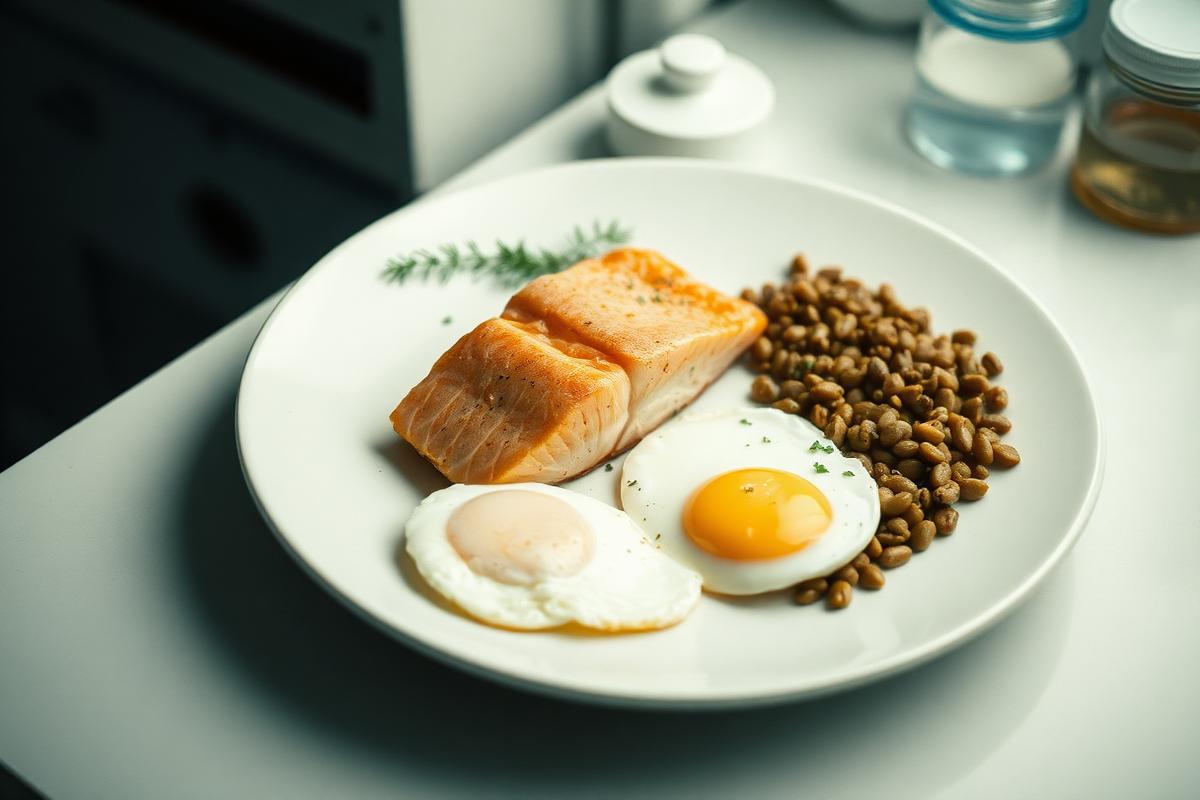
For practical purposes, putting a protein source in the first meal and the meal you tend to overeat at is where the measured effect concentrates.
Editorial note: this article summarises published research for general information. It is not medical advice. Discuss any intervention with a qualified clinician.